
A Deep Dive into Materials for Fuel Cell Bipolar Plates
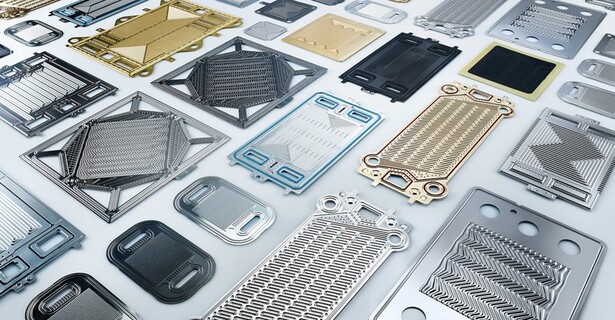
Bipolar plates are essential components of Proton Exchange Membrane (PEM) fuel cells, serving as the backbone that supports efficient energy conversion. By collecting electrical current and distributing reactant gases, they play a pivotal role in optimizing performance and enhancing the durability of fuel cell systems. As the fuel cell industry continues to evolve, the selection of materials for these plates becomes increasingly critical. The right material can significantly influence conductivity, corrosion resistance, and mechanical strength - key factors that determine the efficiency and lifetime of PEM fuel cells.
Different necessary and targeted requirements need to be fulfilled
The bipolar plates in a fuel cell perform several different functions like conducting electrons to the current collector, distribution of the reaction gases, removal of the reaction heat, removal of the process water, corrosion resistance and providing mechanical stability to the stack. For optimum functionality and performance, the bipolar plate material should fulfill these properties. Figure 1 lists the necessary and targeted requirements for the bipolar plates.
 Figure 1: Characteristics & requirements for BPP materials
The selection can be made from different material configurations
Bipolar plates in PEM fuel cells can be made from a variety of materials, each offering distinct advantages but having its own challenges. The materials are broadly categorized into metals, non-metals, and composites. Metals include options like uncoated stainless steel (both ferritic and austenitic), aluminum, and titanium. Coated variants enhance performance by improving corrosion resistance and conductivity. Non-metals primarily feature graphite due to its excellent electrical conductivity and stability under operating conditions. Composites, which combine different matrices, can be either polymer-based or metal-based. Polymer composites often utilize thermosetting or thermoplastic resins like epoxy and vinyl ester, while metal-based composites may incorporate conductive fillers to enhance their properties.
Trade-off between contact resistance and corrosion resistance
In the selection of materials for PEM fuel cell bipolar plates, there is a critical trade-off between interfacial contact resistance and corrosion resistance. Interfacial contact resistance, which affects the ease of electron flow between the bipolar plate and adjacent layers, must be minimized to enhance fuel cell efficiency. Lower contact resistance results in fewer energy losses and thus higher overall efficiency. On the other hand, high corrosion resistance is essential for durability under harsh reaction conditions, with low corrosion current density indicating better resistance to corrosion. However, materials with excellent conductivity, such as stainless steel, typically have lower corrosion resistance, while more corrosion-resistant materials, like titanium, often exhibit higher contact resistance. This inverse relationship necessitates a compromise, frequently achieved by applying specialized coatings that can optimize both conductivity and corrosion resistance, thereby meeting fuel cell performance targets.
Material Characterization
In the evaluation of materials for bipolar plates, understanding their performance under operational conditions is crucial. This section focuses on two key characterization methods:
- Measuring corrosion current density, which assesses material durability in corrosive environments.
- Interfacial contact resistance, which evaluates the efficiency of electrical connections within fuel cells.
These metrics are essential for optimizing material selection and enhancing overall fuel cell performance. The corrosion current density of bipolar plates is measured using a three-electrode cell with potentiostatic and potentiodynamic tests. The setup includes the bipolar plate as the working electrode, a platinum net as the counter electrode, and an Ag/AgCl reference. Testing occurs in a 0.1 M H₂SO₄ solution with 2 ppm HF at 80°C under continuous hydrogen and air purging. Potentiostatic testing applies a constant potential to measure the current over time, while potentiodynamic testing linearly increases the potential from -0.4 to 0.6 V to evaluate corrosion resistance under varying conditions. This method effectively compares materials for fuel cell durability.
To measure the interfacial contact resistance (ICR), a 1,000 A current is applied across two carbon paper pieces clamped between a steel sample and two copper plates. The compression force is gradually increased, and the voltage drop is measured. The total resistance includes four interfaces: two between the carbon paper and copper plates and two between the carbon paper and the steel’s surface film. Calibration is done using only carbon paper between copper plates to correct for its ICR, and potentiostatic pre-treatment of steel samples simulates operating conditions.
Sources:
Yu Leng, Daijun Yang, Pingwen Ming, Cunman Zhang: A comparative study of corrosion resistance evaluation of bipolar plate materials for PEM fuel cells (2021)
Heli Wang, Mary Ann Sweikart, John A. Turner: Stainless steel as bipolar plate material for polymer electrolyte membrane fuel cells (2003)
Downloads
Hier informieren wir regelmäßig über alle wichtigen Entwicklungen im Bereich des Wasserstoffs, der Brennstoffzelle und des Elektrolyseurs.
Whitepaper: In-line Viscosity Measurement
Download a white paper on innovative solutions in the areas of real-time process monitoring and quality assurance
