
BALIS Test System Components Reach Megawatt Performance for the First Time
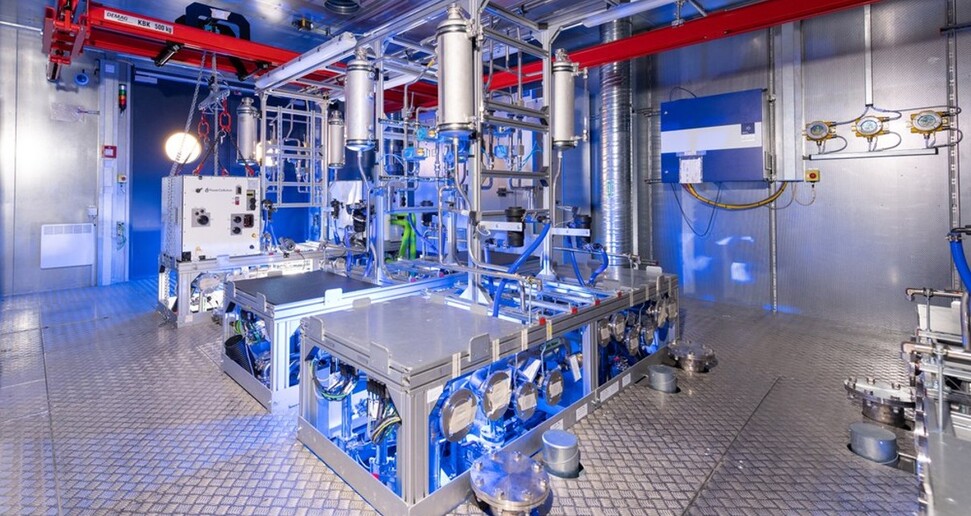
Researchers at the German Aerospace Center (DLR) have achieved a milestone in the development of hydrogen fuel cell technology. For the first time, two key components of the BALIS test system – the fuel cell system and the electric motor – operated at power levels exceeding one megawatt.
Testing individual components as well as entire propulsion chains
The BALIS facility, located in Empfingen, serves as a modular test environment for high-performance electric drive systems based on hydrogen fuel cells. Its flexible setup allows the testing of individual components, such as fuel cell modules, electric motors, storage infrastructure, and control systems, as well as entire propulsion chains.
According to DLR, the achievement marks an important step in establishing next-generation fuel cell systems designed for mobile applications requiring high power output. Potential future uses include shipping, heavy road transport, and aviation.
Coupling up to twelve fuel cell modules
“Reaching the megawatt threshold is a key milestone in the commissioning of the BALIS test field and the first generation of our fuel cell system,” said project leader Dr. Cornelie Bänsch of the DLR Institute of Engineering Thermodynamics. Current systems in this performance class are not commercially available. The challenge, she explained, lies in integrating and stabilizing all components at such power levels. To achieve this, the DLR team electrically coupled twelve fuel cell modules, each consisting of more than 400 individual cells.
The researchers are also developing advanced operational strategies to ensure the system can run stably for longer periods and increase performance beyond one megawatt. Once this is achieved, the team plans to simulate dynamic operating profiles that mirror real-world conditions, such as fluctuating power demands over varying time spans.
Test infrastructure is considered unique worldwide
DLR highlights that if hydrogen from renewable sources is used, fuel cell systems could enable climate-friendly mobility by eliminating CO₂ emissions. The technology also promises to reduce reliance on fossil fuels while strengthening industrial innovation and competitiveness in the high-tech sector.
The BALIS test infrastructure is considered unique worldwide due to its scale, modular design, and research methodology. It is part of the E2U Innovation Campus in Empfingen, a center dedicated to environmental technology development.
Source
Downloads
Hier informieren wir regelmäßig über alle wichtigen Entwicklungen im Bereich des Wasserstoffs, der Brennstoffzelle und des Elektrolyseurs.
Whitepaper: In-line Viscosity Measurement
Download a white paper on innovative solutions in the areas of real-time process monitoring and quality assurance
