
BMW and Toyota Expand Collaboration on Hydrogen Fuel Cell Vehi-cles
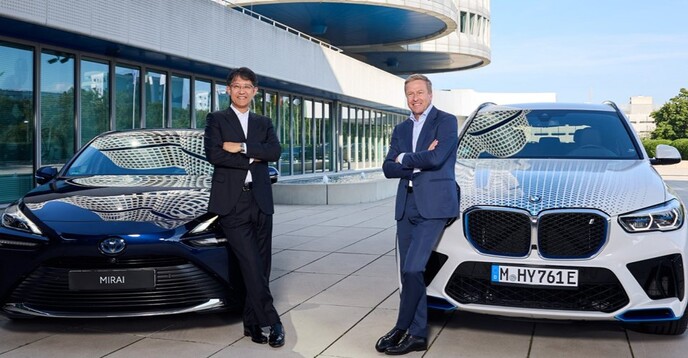
BMW Group and Toyota Motor Corporation have announced plans to enhance their collaboration in hydrogen fuel cell technology, aiming to advance zero-emission transportation. As part of this partnership, BMW plans to launch its first fuel cell electric vehicle (FCEV) for series production in 2028, offering consumers an additional all-electric powertrain option with zero local emissions.
Both companies are aiming towards leveraging their technological expertise to develop the next generation of fuel cell systems, a move they believe will help drive the adoption of hydrogen as a clean energy source. This extended collaboration between BMW and Toyota builds on their shared commitment to developing sustainable mobility solutions, including the promotion of hydrogen as a key component of a low-emission transportation future.
Adavncing hydrogen fuel cell development
BMW is committed to advancing hydrogen fuel cell technology as part of its broader "technology openness" strategy, which aims to provide consumers with a range of future mobility options. This effort would align with BMW's push toward sustainable transportation and its pursuit of innovative powertrain solutions, including battery-electric vehicles (BEVs), plug-in hybrids (PHEVs), and internal combustion engines (ICE).
Toyota, a longtime advocate of hydrogen power, echoed BMW's sentiment on the importance of diversifying approaches to carbon neutrality. Koji Sato, President of Toyota Motor Corporation, highlighted the potential of hydrogen energy to support a sustainable future, emphasizing the need for collaboration across industries to develop necessary infrastructure.
Joint collaboration on powertrain development and procurement
Under the expanded partnership, BMW and Toyota will jointly develop hydrogen fuel cell powertrain systems, which will be used in both passenger and commercial vehicles. This collaboration aims to reduce costs by sharing development and procurement efforts, while still allowing both brands to maintain their distinct identities in the FCEV market. Customers will be able to choose from hydrogen-powered models that reflect the unique characteristics of each brand, bringing the vision of hydrogen-powered mobility closer to reality.
Series Production Set for 2028
Following the successful pilot testing of the BMW iX5 Hydrogen fleet, BMW is preparing to enter series production of hydrogen-powered vehicles in 2028. These vehicles will be integrated into BMW's existing model lineup, providing an additional powertrain option alongside BEVs, PHEVs, and ICEs.
Moving forward on building a hydrogen economy
Both companies see the expansion of hydrogen infrastructure as essential to the success of hydrogen-powered mobility. BMW and Toyota are working to create demand for hydrogen by supporting efforts to build low-carbon hydrogen production and distribution networks. In addition, they are promoting the development of refueling stations to support both passenger and commercial hydrogen vehicles, while continuing to invest in battery electric vehicle charging infrastructure. By collaborating on these initiatives, BMW and Toyota hope to accelerate the transition to hydrogen as a key energy source for future transportation.
Source
Downloads
Hier informieren wir regelmäßig über alle wichtigen Entwicklungen im Bereich des Wasserstoffs, der Brennstoffzelle und des Elektrolyseurs.
Whitepaper: In-line Viscosity Measurement
Download a white paper on innovative solutions in the areas of real-time process monitoring and quality assurance
