
BMW Backs Hydrogen AGVs in Leipzig Logistics Overhaul
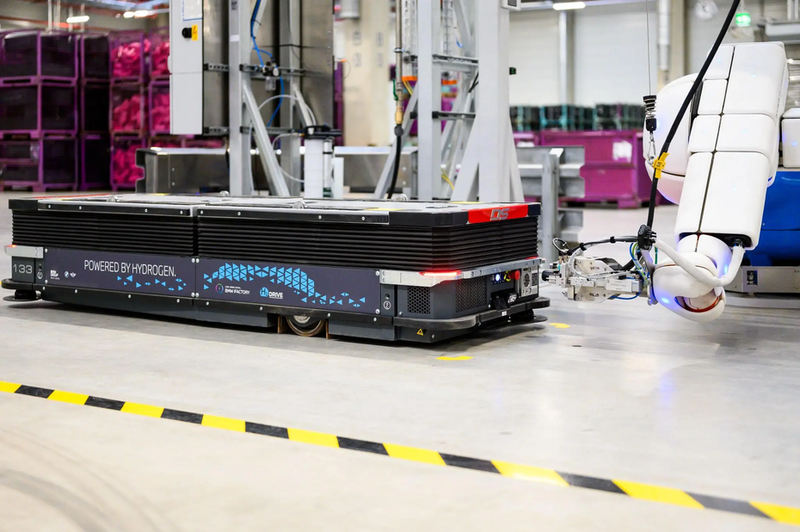
Hydrogen fuel cells are moving from the margins to the heart of factory logistics, as BMW Group’s Leipzig plant rolls out a new generation of hydrogen-powered Automated Guided Vehicles (AGVs) built around Intelligent Energy’s IE-POWER fuel cell systems.
BMW’s Leipzig plant backs hydrogen
BMW has commissioned a new fleet of hydrogen fuel cell AGVs for its Leipzig vehicle assembly plant, replacing a large share of battery-powered units that move parts and components across the factory. The rollout builds on Leipzig’s broader strategy to deploy hydrogen in processes ranging from paint shop operations to manufacturing automation, positioning the site as a testbed for low-carbon production technologies.
Developed with Austrian autonomous vehicle specialist DS Automotion, the new AGVs are the first at BMW to be engineered from the outset around Intelligent Energy’s proprietary fuel cell technology rather than retrofitted into existing battery platforms. More than half of the plant’s operational AGVs now run on IE-POWER systems, with BMW planning to convert the remainder of the fleet over time.
Performance gains over batteries
The decision follows a three-year pilot in which battery AGVs were retrofitted with Intelligent Energy fuel cells and evaluated in regular material-handling duty. In that trial, the fuel cell units demonstrated higher reliability and efficiency while still meeting the carmaker’s environmental targets.
Running on green hydrogen, the new AGVs achieve longer operating times and can refuel within seconds, sharply reducing downtime compared with battery charging cycles. The shorter refuelling stops allowed BMW to operate with fewer vehicles without sacrificing throughput, while maintaining zero tailpipe emissions on the shop floor.Focus on uptime and intralogistics
For BMW, the shift is as much about system flexibility as it is about emissions. Plant managers report that fuel cell AGVs helped overcome the constraints imposed by battery recharging windows, enabling a more responsive and resilient logistics setup inside the factory.
Intelligent Energy argues that these conditions play to fuel cells’ strengths in material handling and intralogistics, where high uptime and predictable duty cycles are essential. The company’s UK-developed low-power units use a patented air-cooling design to deliver relatively high energy density in a compact, lightweight module suitable for AGVs, forklifts, access platforms and other warehouse machinery.
Intelligent Energy’s wider ambitions
The Leipzig deployment represents one of the most extensive real-world tests yet for Intelligent Energy’s technology in demanding industrial operations, according to the company. Executives describe BMW’s decision to adopt a purpose-built hydrogen fleet as a strong validation of the fuel cells’ efficiency and reliability in a globally competitive manufacturing environment.
Intelligent Energy, a privately owned firm with around 600 patents, has spent more than two decades developing hydrogen fuel cell systems for sectors including automotive, aerospace, power generation, telecoms and unmanned aerial vehicles. With activities spanning major markets in Europe, North America and Asia, the company is positioning the BMW project as a showcase for hydrogen’s role in zero-emission intralogistics.
Source
Downloads
Hier informieren wir regelmäßig über alle wichtigen Entwicklungen im Bereich des Wasserstoffs, der Brennstoffzelle und des Elektrolyseurs.
Whitepaper: In-line Viscosity Measurement
Download a white paper on innovative solutions in the areas of real-time process monitoring and quality assurance
