
BMW Group Plant Regensburg to Introduce Hydrogen-Powered Logis-tics Fleet by 2030
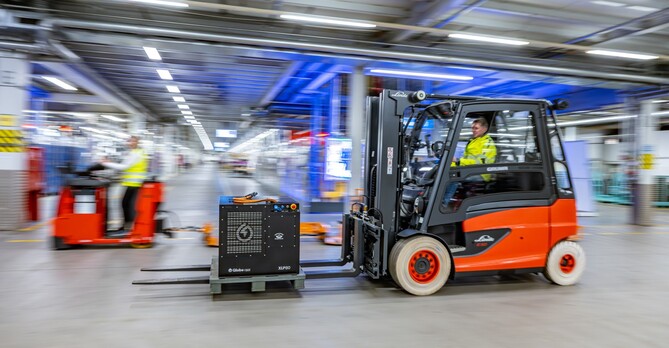
BMW Group Plant Regensburg has announced plans to transform its logistics fleet to hydrogen-powered vehicles as part of its commitment to sustainability and operational efficiency. Starting in 2026, the plant will gradually replace its electric tugger trains and forklift trucks with hydrogen-powered alternatives, aiming for full implementation by 2030.
The initiative will utilize hydrogen propulsion for tasks such as delivering components across production areas, including the press shop, body shop, and assembly line. Armin Ebner, head of BMW Group Plant Regensburg, described the shift as aligning with the company’s vision of a digital and sustainable manufacturing future.
Faster refueling times and less space requirements
According to project manager Katharina Radtke, hydrogen propulsion offers logistical advantages, including faster refueling times compared to electric battery replacements, which currently require up to 15 minutes and significant space for manual handling. Hydrogen fueling stations will be installed directly within production zones, minimizing space requirements.
To support the transition, a two-kilometer pipeline network and six decentralized hydrogen filling stations will be established by early 2026. The plant’s hydrogen consumption is projected to reach approximately 150 tons annually. Hydrogen will be supplied via specialized trailers that can also serve as interim storage.
The current logistics fleet at the Regensburg plant includes around 230 vehicles, such as tugger trains and forklift trucks. The transition to hydrogen power is expected to diversify the plant’s energy mix while optimizing space and logistics efficiency.
The Regensburg plant as an important production site for electric cars
The Regensburg plant, operational since 1986, is a cornerstone of BMW’s global production network. It produces up to 1,400 vehicles daily, including BMW X1 and X2 models, using a flexible production line that accommodates internal combustion engines, plug-in hybrids, and fully electric vehicles. High-voltage batteries for electric models are also produced on-site at a nearby facility established in 2021.
Source
Downloads
Hier informieren wir regelmäßig über alle wichtigen Entwicklungen im Bereich des Wasserstoffs, der Brennstoffzelle und des Elektrolyseurs.
Whitepaper: In-line Viscosity Measurement
Download a white paper on innovative solutions in the areas of real-time process monitoring and quality assurance
