
Data-based route planning for road freight with different energy supply technologies
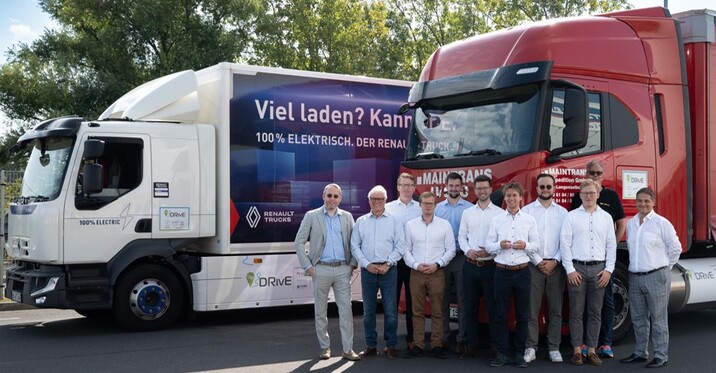
The "DRivE" research project, which stands for "data-based route planning in road freight transport with various energy supply technologies," aims to drive forward the sustainable transformation of the German transport sector. The goal of the project is to develop the technical prerequisites for eco-efficient, data-based long-distance transportation of trucks with alternative propulsion systems. By integrating real-time data from the charging and fueling infrastructure, the disadvantages of alternative drive vehicles will be compensated. In order to achieve these project goals, a market, competition, vehicle, infrastructure and software requirements analysis is conducted. In addition, the technical specification and modeling of the network, infrastructure, processes, data and algorithms as well as the development of a business model contribute significantly to the success of the project.
Ultimately, transportation companies should be able to use vehicles with alternative energy sources such as traction batteries, hydrogen or liquefied natural gas for long-distance transportation without having to accept logistical disadvantages such as detours or waiting times. The solutions developed will be tested on a connecting route between the German lignite mining regions. In addition to the Chair of Production Engineering of E-Mobility Components (PEM) at RWTH Aachen University, the project partners are the Research Institute for Rationalization (FIR) at RWTH Aachen University, Park Your Truck GmbH, ZeKju GmbH, Mansio GmbH, Hammer Road Cargo GmbH, and Maintrans Internationale Spedition.Problem of the lack of transparency of charging and refueling options
The current lack of transparency about the availability of charging and refueling facilities in the transport sector has increased concerns about possible detours and long waiting times. Given the 200 to 500 kilometer ranges of modern electric and fuel cell trucks, real-time information on charging and refueling infrastructure along routes is a crucial factor. This is all the more important as the network of hydrogen and liquefied natural gas refueling stations in Germany is still very limited and access to e-charging stations is often difficult to plan. However, the “DRivE” project has already shown that the inclusion of refueling and charging stations in scheduling with the help of digitalized networking increases confidence in alternatively powered trucks.
“Digital solutions that ensure efficiency and planning reliability can decisively advance electromobility in the commercial vehicle sector and increase the acceptance of alternative drive concepts among logistics and freight forwarders,” says PEM Director Prof. Achim Kampker.
Solution through integrated real-time planning of freight disposition
In order to meet the challenges of alternative drive technologies described above, the “DRivE” project is pursuing a digitalized approach. By integrating fleet planning, location knowledge of charging stations and hydrogen refueling stations as well as continuous communication between dispatcher and driver, the drive routing algorithm offers optimal route planning for alternative commercial vehicle drives.
First of all, the scheduling is assigned to a vehicle and the corresponding driver in the tour management system (TMS). With the help of the fleet management system (FMS), the dispatcher and driver are in constant contact and can thus exchange information about the current status and possible difficulties. These include, for example, traffic jams, longer waiting times at the loading point or a sudden illness of the driver. The information from the TMS, FMS and the stored information on charging stations and refueling stations are combined in the drive algorithm. This algorithm first plans an optimal initial route and calculates the necessary refueling and charging stops for the alternative drive technologies. In the event of unforeseen events, the driver contacts the dispatcher and the FMS is updated to reflect the new circumstances. In the same step, the drive algorithm calculates the new optimal route and the necessary refueling and charging stops based on the latest information. By integrating this data into dispatching, the transformation of the transport sector will be driven forward in the long term. By integrating this data into the planning process, the transformation of the transport sector will be driven forward in the long term.
In the further progress of the project, the drive algorithm will also be expanded to include the reservation of parking spaces at charging stations and real-time data on the used trucks. The first test phase of this digital approach has already been successfully completed.
Test phase of route planning for electric, hydrogen and LNG trucks: project partners successfully completed
During the eight-week test phase under real conditions, the algorithm, which is intended to ensure safe route planning for commercial vehicles with battery, hydrogen or LNG drives in the future, was continually optimized. Following the successful demonstration of the functionality of the route planning system developed by the Aachen-based start-up and project initiator MANSIO, the focus is now on standardizing the so-called fleet management interface. Together with the project partner “Park Your Truck” from Dessau-Roßlau, an option for the digital reservation of charging stations is also to be implemented in the software.
Downloads
Hier informieren wir regelmäßig über alle wichtigen Entwicklungen im Bereich des Wasserstoffs, der Brennstoffzelle und des Elektrolyseurs.
Whitepaper: In-line Viscosity Measurement
Download a white paper on innovative solutions in the areas of real-time process monitoring and quality assurance
