
Denmark Launches First Green Hydrogen Export to Germany
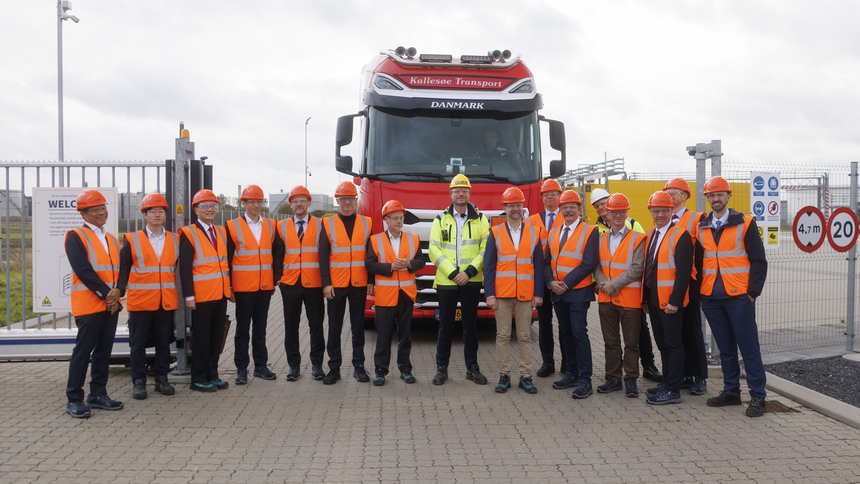
Denmark inaugurated the HySynergy plant in Fredericia on November 3, marking the country's first export of certified green hydrogen to Germany and establishing one of Europe's few operational large-scale electrolysis facilities at a time when the sector faces significant headwinds.
Industrial Scale Production Begins
The 20-megawatt facility, jointly developed by Everfuel and Crossbridge Energy Fredericia, produces approximately eight tonnes of hydrogen daily using renewable wind and solar power. The plant received RFNBO certification—the European Union's strictest standard for green hydrogen—qualifying it for EU funding mechanisms and greenhouse gas reduction quotas.
Crossbridge Energy's refinery already consumes 35 tonnes of hydrogen per day in fuel production, currently sourced from fossil crude oil. The collaboration demonstrates a practical pathway for refineries to reduce emissions, though CEO Finn Schousboe noted that current legislation provides limited incentive for expansion.
Sector Faces Delays and Setbacks
The HySynergy project, initially scheduled for 2023, encountered delays that reflect broader challenges in Europe's hydrogen sector. Only about 20 percent of planned EU hydrogen projects are expected to come online by decade's end, far short of the bloc's 40-gigawatt production target for 2030. High costs and insufficient demand have prompted developers to cancel or reduce investments globally.
Denmark's planned hydrogen pipeline to Germany, essential for larger-scale exports, has been delayed from 2028 to 2031 due to increased project complexity and longer environmental approval processes. The setback affects both Denmark's export ambitions and Germany's import strategy, with Berlin acknowledging it cannot meet domestic hydrogen demand through German production alone.
Export Ambitions Remain
Everfuel CEO Jacob Krogsgaard stated the company aims to establish over 2 gigawatts of electrolysis capacity in Denmark by 2035, including expansions of HySynergy and the development of Project Frigg near Vejen. The Frigg project would connect directly to the future hydrogen pipeline for deliveries to German industrial customers.
The HySynergy plant is co-owned by Hy24, which manages a 2-billion-euro clean hydrogen infrastructure fund backed by over 50 investors including Air Liquide, TotalEnergies, and Allianz. Denmark's potential hydrogen export capacity to Germany could reach 16 terawatt-hours by 2030, corresponding to about 4.5 gigawatts of electrolysis capacity.
Finance Minister Nicolai Wammen and Japanese Ambassador Hideki Uyama attended the inauguration, underscoring international interest in the project. The facility also supplies surplus heat to the local district heating system through partner TVIS.
Source
Downloads
Hier informieren wir regelmäßig über alle wichtigen Entwicklungen im Bereich des Wasserstoffs, der Brennstoffzelle und des Elektrolyseurs.
Whitepaper: In-line Viscosity Measurement
Download a white paper on innovative solutions in the areas of real-time process monitoring and quality assurance
