
Dutch Government Awards €28 Million in Hydrogen Mobility Subsidies
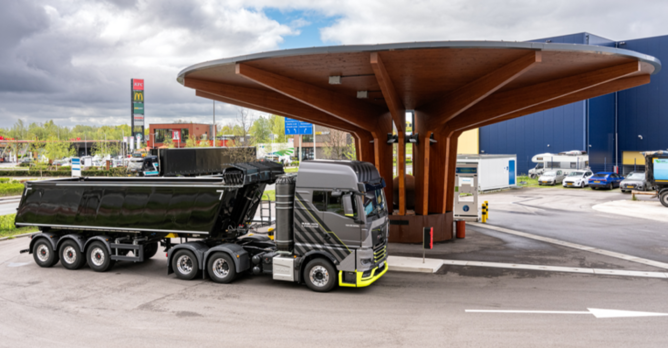
The Dutch Ministry of Infrastructure and Water Management has allocated €28 million under the Subsidie Waterstof in Mobiliteit (SWiM) program to support hydrogen mobility. On December 5, 2024, two consortia linked to hydrogen refueling stations operated by Fountain Fuel were among the recipients of this funding. The program attracted interest from 100 businesses, 12 station operators, and 10-15 vehicle manufacturers, with numerous collaborative initiatives between hydrogen stations and transport and logistics companies being approved for funding.
The two consortia, led by Fountain Fuel, received €8.2 million in subsidies. These consortia involve 30 partners, including Van Hooft Transport and MAN Truck & Bus. The adoption of hydrogen as a fuel is expected to reduce CO2 emissions by approximately 4,000 tons annually.
Increasing Demand Prompts Budget Expansion
Van Hooft Transport's managing director, Maarten Bos, emphasized the potential of hydrogen for heavy-duty vehicles and specialized equipment, calling it "a crucial step toward fleet sustainability." Similarly, Jacobjan Vermeiden, Manager of Transport Solutions at MAN Truck & Bus, highlighted the subsidy’s role in accelerating the development and deployment of hydrogen-powered trucks.
Due to significant interest in the 2024 subsidy round, the ministry announced at the National Hydrogen Congress on December 4, 2024, that the 2025 SWiM budget would increase to €40 million.
Hydrogen as an Alternative to Battery Electric Vehicles (BEVs)
The introduction of SWiM marks a shift in hydrogen's position as a viable alternative to BEVs, particularly for long-haul and heavy-duty applications. Beer Kwantes, Fountain Fuel’s Head of Business Development, stated that hydrogen complements electric mobility, especially for sectors requiring high operational reliability and minimal downtime, such as logistics and construction.
Hydrogen-powered vehicles, which feature faster refueling times and longer ranges, are also becoming attractive for employers looking to improve working conditions and attract talent. Stephan Bredewold, Director of Fountain Fuel, noted that hydrogen vans offer benefits like reduced "charging stress," which employers increasingly view as an additional perk for employees.
Addressing Grid Congestion Challenges
Hydrogen mobility is also seen as a solution to the growing issue of grid congestion, which has slowed the rollout of charging infrastructure. According to Bredewold, a single hydrogen refueling station can offset the equivalent of 11.76 million kWh of electricity demand annually, alleviating pressure on the national grid and supporting the transition to zero-emission transport.
The SWiM subsidies will accelerate the development of Fountain Fuel's hydrogen stations, with plans to open 25 stations nationwide by 2025. Construction of two XL hydrogen refueling stations in Nijmegen and Rotterdam is already underway. The increasing availability of hydrogen infrastructure is expected to encourage vehicle manufacturers to scale up production, making hydrogen a more accessible and cost-effective option for transportation.
Source
Downloads
Hier informieren wir regelmäßig über alle wichtigen Entwicklungen im Bereich des Wasserstoffs, der Brennstoffzelle und des Elektrolyseurs.
Whitepaper: In-line Viscosity Measurement
Download a white paper on innovative solutions in the areas of real-time process monitoring and quality assurance
