
GM and Honda begin their fuel cell production
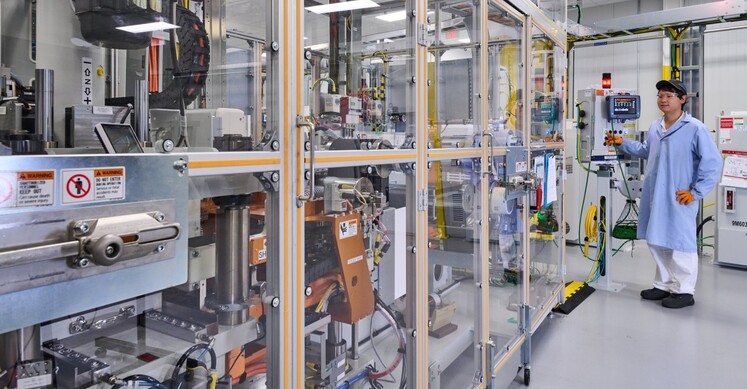
General Motors (GM) and Honda have officially initiated the operation of their collaborative 50-50 joint venture hydrogen fuel cell production facility known as FCSM. Anticipated to be a pioneering effort in large-scale manufacturing, FCSM was established in Michigan, USA, in 2017. The joint investment of $85 million has already yielded the creation of 80 jobs.
Significant reduction of the manufacturing costs
The solutions developed at FCSM will be harnessed by both automotive giants across diverse product applications and strategic business ventures. The collaboration aims to achieve a one-third reduction in the manufacturing cost of the new fuel cell systems compared to the 2019 Honda Clarity fuel cell.
To attain this goal, GM and Honda are strategically focusing on minimizing development and manufacturing expenses. Leveraging economies of scale, advancing cell design, streamlining supporting auxiliary equipment, adopting common sourcing practices, and reducing reliance on expensive precious metals are key elements of their cost-cutting strategy.
Commitment to the hydrogen strategy
Suheb Haq, President of FCSM, expressed, “We begin the process with raw materials for membrane and electrode all the way through completed systems. Ongoing investment and commitment by both companies is driving our success at FCSM. This commitment aligns with our mission of making high quality, durable and affordable hydrogen fuel cell systems for a wide range of applications and customers.”
Tetsuo Suzuki, Vice President of FCSM, emphasized, “We integrated the strengths of Honda and GM to create the most capable production system at this joint venture. We brought a mass production mindset with attention to detail and a focus on high quality, and now we are ready to meet the needs of the customers for the future applications of fuel cell technology and the beginning of the hydrogen era.”
In February of 2023, Honda outlined its hydrogen strategy, aiming to produce 60,000 fuel cell units by 2030. The goal includes targeting 'a few 100,000' units annually by the latter half of the 2030s, reflecting a steadfast commitment to advancing hydrogen technology on a large scale.
Source
Downloads
Hier informieren wir regelmäßig über alle wichtigen Entwicklungen im Bereich des Wasserstoffs, der Brennstoffzelle und des Elektrolyseurs.
Whitepaper: In-line Viscosity Measurement
Download a white paper on innovative solutions in the areas of real-time process monitoring and quality assurance
