
Hyundai to Convert Jeonju Plant into Hydrogen Vehicle Manufacturing Hub
According to media reports, Hyundai Motor Co. plans to transform its commercial vehicle plant in Jeonju, North Jeolla Province, into a manufacturing center for hydrogen-powered buses and trucks. This strategic shift comes amid increasing competition from imported vehicles from China and Europe.
Focus on production of fuel cell electric vehicles
According to industry sources, Lee Dong-seock, president of Hyundai’s domestic production division, recently informed union leaders that the Jeonju plant will focus on producing hydrogen fuel cell electric vehicles (FCEVs). Currently, the plant manufactures electric buses, such as the County EV, the multi-purpose Staria, mid-size trucks, and hydrogen-powered commuter vehicles.
This initiative aims to boost the plant's operating rates, which are currently at about 40%. Despite ana annual production capacity of 100,000 vehicles, the factory produced only 39,934 units last year.
Answering strong efforts by competitors in Europe and China
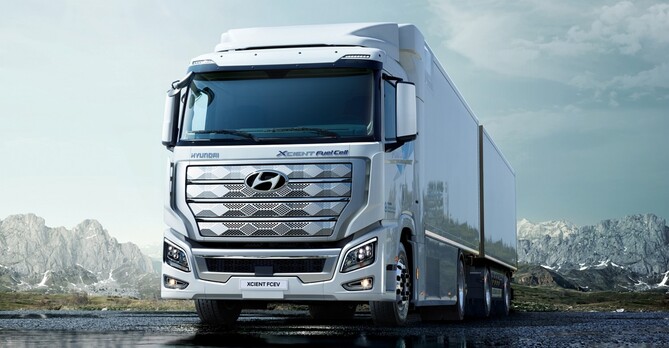
In a bid to enhance production, Hyundai increased its annual hydrogen fuel cell bus production capacity from 500 to 3,100 units earlier this year. The Jeonju plant is set to start building various vehicle models, including car transport trucks based on the Xcient hydrogen vehicle, refrigerated trucks, and fuel cell tractors within the year. Additionally, new hydrogen-powered express buses and low-floor metropolitan shuttle buses are expected to be developed by 2027.
This move is part of Hyundai's broader strategy to compete against aggressive marketing efforts by Chinese and European commercial vehicle manufacturers. According to CarIsYou, a Seoul-based automotive data provider, Chinese companies sold 1,372 large-size electric buses in Korea last year, surpassing the sales of Korean-made electric buses for the first time. Despite revised EV subsidy plans favoring Korean vehicles, sales of Chinese-made electric buses remained robust in the first five months of this year, with 638 units sold compared to 500 units of Korean-made buses.
Mass-produced fuel cell electric heavy-duty truck is already on the streets
In the domestic truck market, imported trucks, predominantly from Europe, sold 3,037 units in 2023, nearing the sales of 3,677 units of Korean-made trucks.
Hyundai has been heavily investing to maintain its leadership in the global hydrogen-powered vehicle market. In 2021, the company invested in H2 Mobility Deutschland GmbH & Co., a German operator of hydrogen fueling stations, to strengthen its position in Europe. Hyundai’s Xcient, launched in 2019, is the world’s first mass-produced fuel cell electric heavy-duty truck.
While fuel cell electric vehicles (FCEVs) are generally more expensive than battery electric vehicles (BEVs), they offer advantages for long-haul transport due to their greater range.
Source
Downloads
Hier informieren wir regelmäßig über alle wichtigen Entwicklungen im Bereich des Wasserstoffs, der Brennstoffzelle und des Elektrolyseurs.
Whitepaper: In-line Viscosity Measurement
Download a white paper on innovative solutions in the areas of real-time process monitoring and quality assurance
