
Kawasaki Bets on Liquid Hydrogen Hub to Power Japan’s Energy Transition
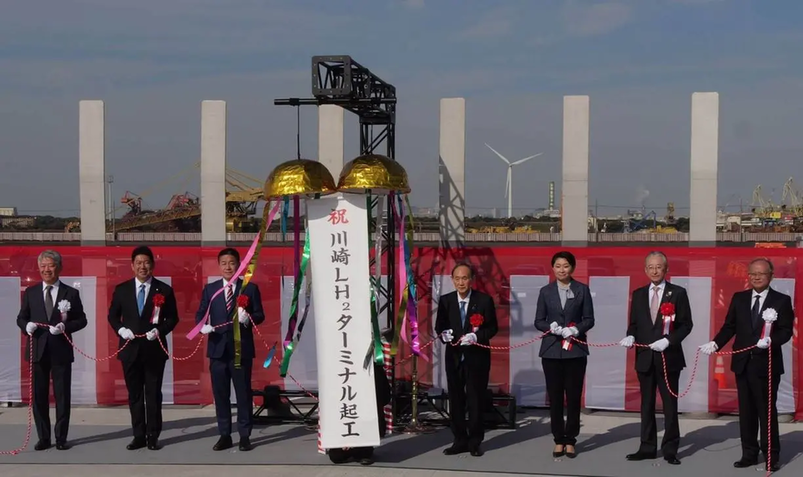
Kawasaki Heavy Industries and Japan Suiso Energy have broken ground on what is set to become Japan’s first large-scale liquid hydrogen import terminal, progressing efforts to build a commercial hydrogen supply chain. The new facility underscores Japan’s determination to secure low‑carbon energy imports as part of its long-term decarbonisation strategy.
A new hub for liquid hydrogen
The planned Kawasaki LH2 Terminal will be built at Ogishima, in Kawasaki City, and is designed as a key gateway for imported liquid hydrogen. The site will feature large storage capacity and marine infrastructure to receive specialised liquid hydrogen carriers, positioning the port as a future hub for hydrogen trade in Northeast Asia.
According to information shared by the project partners, the terminal will be equipped with a large cryogenic storage tank and associated loading and regasification systems tailored to liquid hydrogen’s extreme low temperatures. These facilities are intended to support stable, commercial‑scale imports rather than short‑term demonstration projects.
Strategic alliance with Japan Suiso Energy
Japan Suiso Energy (JSE), part of the broader Hydrogen Energy Supply Chain initiative linking Australia and Japan, is partnering with Kawasaki to develop and operate the Ogishima terminal. JSE’s role is to secure supply from overseas projects, while Kawasaki contributes engineering, shipbuilding and cryogenic handling expertise.
Kawasaki has spent more than a decade developing liquid hydrogen carriers and related infrastructure, including purpose-built ships and storage tanks. The Ogishima project is presented by the companies as the first move from pilot operations towards a commercially viable hydrogen corridor between resource-rich regions such as Australia and demand centres in Japan.
Building a full hydrogen value chain
The terminal is expected to integrate with a wider value chain, from production at overseas sites to domestic distribution for industrial users, power generation and potentially mobility applications. Once operational, the facility could supply hydrogen for power plants, refineries and port logistics, helping to displace fossil fuels in hard‑to‑abate sectors.
Japan’s energy planners view imported hydrogen as a complement to electrification and domestic renewables, particularly where direct electrification is difficult. The Ogishima terminal aligns with government strategies that envisage hydrogen playing a larger role in power generation and heavy transport in the 2030s and beyond.
Significance for Japan’s energy transition
For Kawasaki, the terminal reinforces its Group Vision 2030 focus on “Energy and Environmental Solutions” and builds on previous investments in liquid hydrogen carriers and demonstration terminals. The company is positioning itself as a core technology provider for hydrogen infrastructure, from production equipment and storage tanks to marine transportation.
For Japan more broadly, the project sends a signal that hydrogen imports are moving out of the pilot phase and towards long‑term market development. If successful, the Ogishima terminal model could be replicated at other ports, supporting a regional network of liquid hydrogen hubs across Asia and potentially linking into emerging European demand.
Source
Downloads
Hier informieren wir regelmäßig über alle wichtigen Entwicklungen im Bereich des Wasserstoffs, der Brennstoffzelle und des Elektrolyseurs.
Whitepaper: In-line Viscosity Measurement
Download a white paper on innovative solutions in the areas of real-time process monitoring and quality assurance
