
Natural Hydrogen—Are Electrolyzers Still Necessary? A Comment
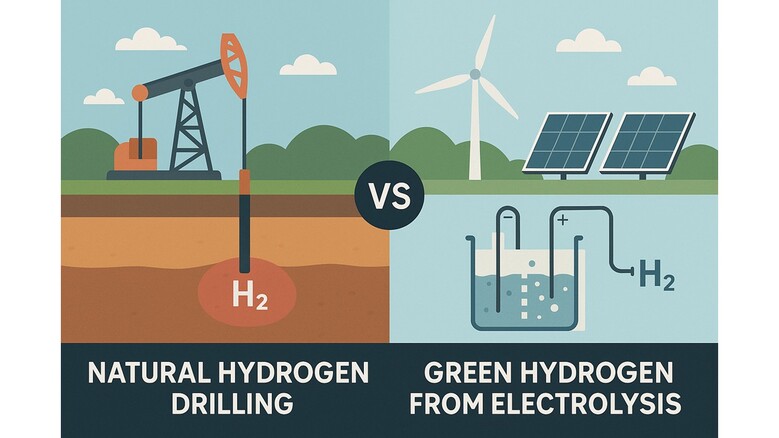
Recent discoveries of naturally occurring hydrogen deposits have sparked discussions about the future of hydrogen production technologies. While electrolyzer technology continues to advance, geological hydrogen reserves could potentially transform our approach to clean energy. The emerging field of natural hydrogen exploration presents both opportunities and limitations that must be weighed against established production methods.
The Emergence of Natural Hydrogen
Geological Origins and Distribution
Natural hydrogen, sometimes called "white hydrogen" or "gold hydrogen," occurs naturally within the Earth's crust. Research indicates that hydrogen has been discovered in numerous geological environments, including oceanic spreading centers, transform faults, passive margins, convergent margins, and intraplate settings. The primary mechanisms generating this hydrogen include alterations in iron(II)-containing rocks, radiolysis of water, degassed magma, and reactions between water and silica-containing rocks during mechanical fracturing.
The distribution of natural hydrogen is proving more widespread than previously thought. Significant concentrations have been reported across different countries, though currently, Mali stands as the only nation extracting natural hydrogen to generate electricity. The Bougou-1 well in Mali represents one of the most studied cases of natural hydrogen occurrence, providing valuable insights into geological accumulation mechanisms.
Natural hydrogen can exist in various forms within geological structures. It may appear as free gas, be adsorbed onto mineral surfaces, or become trapped in rock inclusions. This versatility presents both opportunities and challenges for potential extraction methods.
Current State of Exploration
Despite its promise, natural hydrogen exploration remains in its infancy. The field requires substantial further investigation, particularly in developing effective exploration techniques and exploitation technologies. In the case of the only currently operational well, the Bougou-1, annual production remains at a low level and only suffices to serve the electricity needs of the local village.
Electrolyzer Technology: Current State and Advancements
Established Production Methods
Electrolysis represents the most established clean method for producing hydrogen. The process involves passing an electric current through water to separate it into hydrogen and oxygen.This electrochemical pathway produces high-purity hydrogen suitable for applications ranging from industrial processes to fuel cells for transportation.
Water electrolysis offers significant advantages including scalability, flexibility in feedstock utilization, and compatibility with renewable energy sources. When powered by renewable electricity, the process yields "green hydrogen," producing virtually no greenhouse gas emissions during operation.
Several electrolyzer technologies exist in the market, with solutions in the fields of AEL and PEM technology readily available.
Comparative Analysis: Natural vs. Electrolyzer Hydrogen
Economic Considerations
The economic comparison between natural hydrogen and electrolyzer-produced hydrogen hinges on several factors. While natural hydrogen exploration promises potentially lower production costs by eliminating the electricity requirements of electrolysis, the technology for large-scale extraction remains underdeveloped. The development and utilization of natural hydrogen resources could significantly reduce hydrogen costs compared to current production methods.
Hydrogen from electrolysis at a German location costs around 6 €/kg at the point of production. While currently high, these prices follow predictable decline curves as technology matures, renewable energy prices decline, and deployment scales up. Government incentives further improve the economics, with programs like the Inflation Reduction Act or RFNBO certification In Europe providing substantial tax credits that effectively lower green hydrogen costs. Both pathways face different types of economic uncertainties – natural hydrogen exploration carries geological and extraction risk, while electrolyzer economics remain tied to electricity costs and equipment prices.
Scale and Reliability
The scalability question presents different challenges for each approach. Electrolyzers offer proven scalability, with installations possible virtually anywhere with water and electricity access. Plants can be sized from small, distributed units to large, centralized facilities, providing flexibility to match various demand profiles.
Natural hydrogen, conversely, faces geographical constraints similar to fossil fuel resources. Production depends on finding suitable geological formations with sufficient concentration and flow rates. While some regions like Mali have demonstrated commercial viability, the global distribution of economically extractable reserves remains uncertain. Current exploration is identifying promising regions including ophiolite massifs in the Balkans, sedimentary basins in China, and other geological formations, but comprehensive resource assessments are still emerging.
Environmental Impact
From an environmental perspective, both pathways offer significant advantages over fossil-based hydrogen production. Natural hydrogen only represents a clean, carbon-free energy source, when co-occurring gases such as carbon dioxide or methane are carefully separated and managed. However, local disruptions to ecosystems from drilling operations, as well as potential subsurface geological impacts, cannot be avoided.
Electrolysis, when powered by renewable energy, produces hydrogen with minimal ongoing emissions. But water consumption represents a consideration for electrolysis in water-stressed regions, though technological improvements are addressing this concern.
Complementary Roles in a Hydrogen Economy
Transition Strategies
Rather than viewing natural hydrogen and electrolysis as competing technologies, evidence suggests they may serve complementary roles in a comprehensive transition strategy. As hydrogen demand grows across multiple sectors, a diverse supply portfolio becomes increasingly important for energy security and price stability.
Natural hydrogen exploration could follow development patterns similar to the natural gas industry, with initial geological surveys identifying promising regions followed by exploratory wells and production infrastructure. Meanwhile, electrolyzer deployments can continue scaling based on renewable energy availability and proximity to hydrogen demand centers.
This dual-track approach allows flexibility as both technologies mature. Regions with geological hydrogen potential could prioritize exploration and extraction, while areas rich in renewable resources but lacking natural hydrogen could focus on electrolyzer deployment.
Infrastructure Considerations
The hydrogen transition faces significant infrastructure challenges regardless of production method. There's a growing trend toward repurposing existing natural gas networks for hydrogen transport, offering economic and environmental benefits compared to building entirely new dedicated hydrogen pipelines.
Both natural hydrogen and electrolyzer facilities will need to connect to this evolving hydrogen transportation network. Electrolyzers offer the advantage of flexible siting, potentially allowing production closer to demand centers or directly at renewable generation sites. Natural hydrogen extraction, like fossil fuels, requires transportation infrastructure from geological reserves to consumption areas.
Conclusion
The emergence of natural hydrogen as a viable energy resource adds an intriguing dimension to the clean hydrogen landscape but does not eliminate the need for electrolyzers. Rather than rendering electrolysis obsolete, natural hydrogen appears positioned to complement electrolyzer technology in a diversified hydrogen production portfolio. The geological constraints of natural hydrogen mean certain regions will have abundant resources while others have none, creating a continued need for location-flexible production via electrolysis.
Sources:
Pujol et al: Natural hydrogen occurrence in Bougou-1 well (Mali) (2022)
Oxford Institute for Energy Studies: Natural (geologic) hydrogen and its potential role in a net-zero carbon future (2024)
Wang et al: The Origin and Occurrence of Natural Hydrogen (2023)
Knez at al: Up-to-Date Status of Geoscience in the Field of Natural Hydrogen (2023)
Levy et al: Looking for natural hydrogen in Albania and Kosovo (2023)
Wei et al: Helium and natural hydrogen in the Bohai Bay Basin, China (2025)
Downloads
Hier informieren wir regelmäßig über alle wichtigen Entwicklungen im Bereich des Wasserstoffs, der Brennstoffzelle und des Elektrolyseurs.
Whitepaper: In-line Viscosity Measurement
Download a white paper on innovative solutions in the areas of real-time process monitoring and quality assurance
