
Stellantis Withdrawal Poses Challenges for French Hydrogen Company Symbio
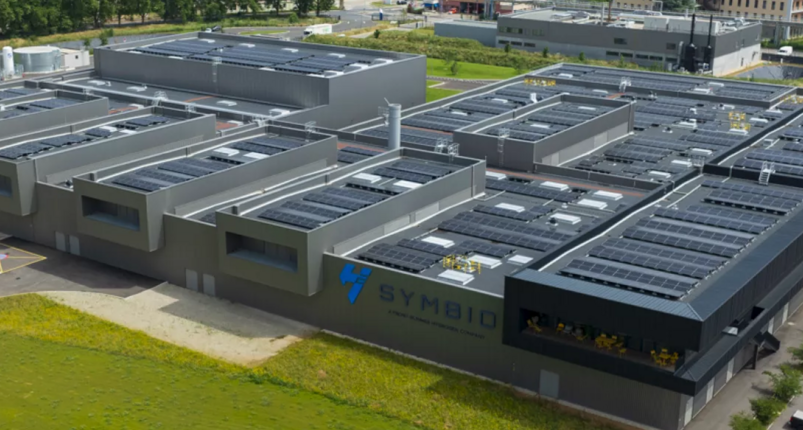
French hydrogen fuel cell manufacturer Symbio is reassessing its strategic direction following Stellantis’ decision to end its hydrogen-powered light commercial vehicle (LCV) programs. The automaker’s move, announced two weeks ago, has raised concerns about the future of joint industrial initiatives and the potential impact on employment in the hydrogen sector.
Systems specifically designed for light commercial vehicles constituted a significant portion of the 2025 production plans
Jean-Baptiste Lucas, who assumed the role of CEO at Symbio on July 10, stated that the company is committed to navigating this unexpected development and contributing to the resilience of France’s hydrogen industry. In a statement, Lucas described the decision as a “shock” to Symbio’s 640 employees and underscored the company’s efforts to meet Stellantis’ prior technical and production objectives.
Symbio had been a key partner in the development of fuel cell systems for Stellantis, notably through its Step2 program based on T5 technology—40 kW systems designed specifically for light commercial vehicles. According to Symbio, these systems constituted a significant portion of its 2025 production plans. The company had already begun scaling up production at its SymphonHy facility in Saint-Fons, described as Europe’s largest integrated hydrogen fuel cell production site and the only one currently certified to the IATF 16949 automotive standard.
Symbio is evaluating several financial and industrial scenarios to mitigate the consequences
Stellantis’ decision is expected to bring an immediate and lasting halt to its hydrogen LCV activities. In response, Symbio’s leadership is evaluating several financial and industrial scenarios to mitigate the consequences, with the goal of preserving jobs and maintaining operations. Discussions with Stellantis are ongoing regarding the automaker’s contractual obligations and possible compensation.
As part of its contingency planning, Symbio is considering accelerating the mass production of its 75 kW StackPack™ fuel cell systems, redirecting resources previously allocated to the Stellantis programs. These systems are designed for a variety of applications, including buses, coaches, and stationary energy-intensive sectors like data centers.
Ongoing conciliation process with its shareholders
Symbio also acknowledged the ongoing conciliation process at the Lyon Commercial Court with its shareholders—Stellantis, Michelin, and Forvia—each holding an equal one-third stake in the company. The firm expressed regret over recent leaks surrounding the confidential proceedings.
Looking ahead, Symbio remains focused on expanding its technological offerings and supporting the broader transition to hydrogen energy. The company plans to launch new generations of 150 kW and 300 kW fuel cell systems by 2028, targeting heavy-duty transportation markets. Despite the current challenges, Symbio reaffirmed its long-term vision to contribute to a sovereign hydrogen industry in France and Europe, aiming to position itself as a leading player in the global hydrogen technology sector.
Source
Downloads
Hier informieren wir regelmäßig über alle wichtigen Entwicklungen im Bereich des Wasserstoffs, der Brennstoffzelle und des Elektrolyseurs.
Whitepaper: In-line Viscosity Measurement
Download a white paper on innovative solutions in the areas of real-time process monitoring and quality assurance
