
Wiener Linien Acquire Innovative Battery-Hydrogen Buses for City Operations
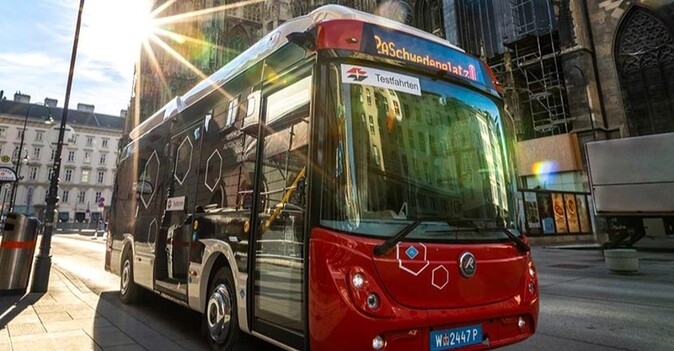
Starting in mid-2025, Wiener Linien will replace the electric buses in Vienna's city center with new battery-hydrogen buses. Following a Europe-wide tender, Wiener Linien is investing in ten new minibuses from the Italian manufacturer Rampini. These buses, which utilize both hydrogen and electric power, are the first of their kind and will replace the fully electric buses currently operating on routes 2A and 3A, which have reached their mechanical limits.
Fleet reduction through the elimination of recharging possible
The new battery-hydrogen buses shall provide increased flexibility for Wiener Linien in the city center. While the new buses resemble the current ones in size and appearance, the battery-hydrogen technology would represent a significant innovation in the minibus segment. The Rampini Hydron Range Extender is powered by a 230 kW electric motor, deriving its energy from a 175 kWh battery. A hydrogen fuel cell generates additional electricity during operation, allowing the bus to run all day without needing to recharge. This eliminates the need for charging infrastructure in the city center and enables Wiener Linien to reduce the fleet for routes 2A and 3A from 12 to 10 buses. The new buses also allow for flexible adjustments to schedules as needed.
The new buses will be refueled and charged at an H2 filling station and charging station operated by Wien Energie and Wiener Netze. The hydrogen used is produced locally in Vienna.
Alignment with the general strategy towards climate neutrality
Wiener Linien's adoption of battery-hydrogen buses would be part of its broader commitment to climate-friendly propulsion technologies. In February, a new competence center for electromobility was opened, and six bus lines have already transitioned to purely electric operation, featuring 30 twelve-meter eCitaro buses. The acquisition and maintenance of the new Rampini buses involve an investment of approximately twelve million euros, jointly funded by Wiener Linien, the Ministry of Climate Protection, and the EU.
The new buses would have undergone extensive testing and leverage synergies within the Wiener Stadtwerke group. The battery-hydrogen technology would allow for uninterrupted all-day operation. The required green hydrogen is produced locally in Vienna, ensuring independent and climate-neutral operations. This initiative is expected to reduce emissions further while maintaining the high comfort standards for Wiener Linien passengers.
Future plans for hydrogen buses in Vienna
In addition to the new Rampini Hydron Range Extender minibuses, ten hydrogen buses from the Portuguese manufacturer CaetanoBus will be introduced on route 39A in 2025. These twelve-meter, barrier-free buses will be refueled at the hydrogen station operated by Wien Energie and Wiener Netze at the Leopoldau bus garage (21st district). Thus, Wiener Linien will utilize the hydrogen infrastructure of the Wiener Stadtwerke group for two new bus models, which has been strategically developed in advance. The purchase of the battery-hydrogen buses is supported by EU funds through the Climate Protection Ministry's EBIN program.
Technical specifications of the Rampini battery-hydrogen bus
- Model: Rampini Hydron
- Manufacturer: Rampini Carlo S.p.A.
- Production Location: Italy
- Dimensions: 8 meters long, 2.2 meters wide, 3.25 meters high
- Capacity: 42 passengers (13 seated, 28 standing, 1 flexible space)
- Fuel Cell Power: 30 kW
- Traction Battery: 175 kWh
- Drive: Central electric motor with 230 kW power
- Hydrogen Tanks: 3 tanks on the roof with a total capacity of 15 kg
- Range: 250 km
Source
Downloads
Hier informieren wir regelmäßig über alle wichtigen Entwicklungen im Bereich des Wasserstoffs, der Brennstoffzelle und des Elektrolyseurs.
Whitepaper: In-line Viscosity Measurement
Download a white paper on innovative solutions in the areas of real-time process monitoring and quality assurance
