
MTU Aero Engines Advances the Flying Fuel Cell: Milestones for Hydrogen-Powered Aviation
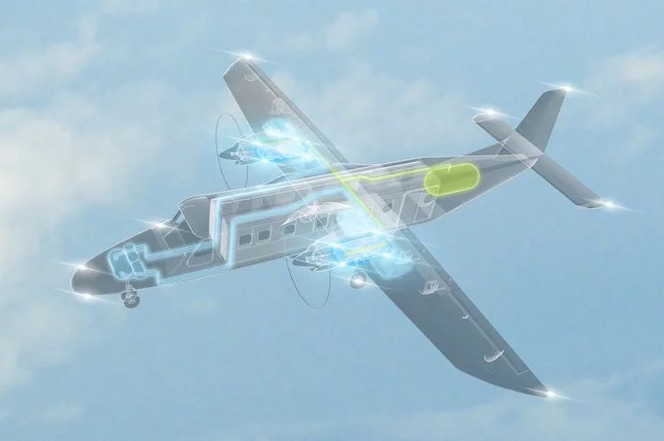
MTU Aero Engines has reached significant milestones in its ambitious Flying Fuel Cell™ (FFC) program, marking a step forward in the development of hydrogen-powered, zero-emission aircraft propulsion.
Design Finalized and Stack Production Underway
The FFC project, unveiled at the Paris Air Show on June 16, 2025, has completed its critical design review for the first electric 600-kilowatt powertrain. This milestone allows MTU to move from the design phase into manufacturing and assembly. Production of advanced fuel cell stacks for the demonstrator is already underway in Munich, representing a key advance in the realization of hydrogen-electric aviation.
Electric Motor Achieves High-Efficiency Performance
A crucial component of the FFC powertrain is its 600-kilowatt electric motor, co-developed with MTU’s subsidiary eMoSys GmbH. In recent tests, the motor demonstrated a maximum continuous output of 600 kW and achieved an efficiency rate exceeding 96 percent—both during takeoff and at cruising altitude. This performance is essential for the demanding operational profile of regional aircraft and underscores the viability of electric propulsion in commercial aviation. 1.
Dedicated Testing Infrastructure in Place
MTU has established specialized testing infrastructure at its Munich facility. The first test cell, now operational, is designed for fuel cell stacks with up to 500 kilowatts of electrical power per unit. A second system test cell is under construction and will be used to evaluate the complete engine system, including hydrogen infrastructure, cooling, and pressurized air supply. These facilities are central to validating the technology and preparing it for real-world applications.
European Collaboration: The HEROPS Project
MTU is also leading the HEROPS (Hydrogen-Electric Zero Emission Propulsion System) clean aviation research project, a European initiative aimed at developing climate-neutral, hydrogen-driven electric powertrains for regional aircraft. The project involves seven partners and focuses on scaling powertrains up to 1.8 megawatts, with plans for a ground demonstrator to prove the technology’s feasibility. The long-term vision is to enable modular engine architectures capable of delivering two to four megawatts, targeting commercial deployment for regional planes by 2035. 1.
Industry Context and Outlook
MTU Aero Engines, a global leader in aircraft engine technology, is leveraging its expertise and industrial capacity to drive innovation in sustainable aviation. With over 13,000 employees worldwide and a presence in one in three commercial aircraft, MTU’s commitment to hydrogen technology reflects broader industry efforts to decarbonize air travel and meet future climate targets.
Source:
Downloads
Hier informieren wir regelmäßig über alle wichtigen Entwicklungen im Bereich des Wasserstoffs, der Brennstoffzelle und des Elektrolyseurs.
Whitepaper: In-line Viscosity Measurement
Download a white paper on innovative solutions in the areas of real-time process monitoring and quality assurance
